
Bitumen 60/70
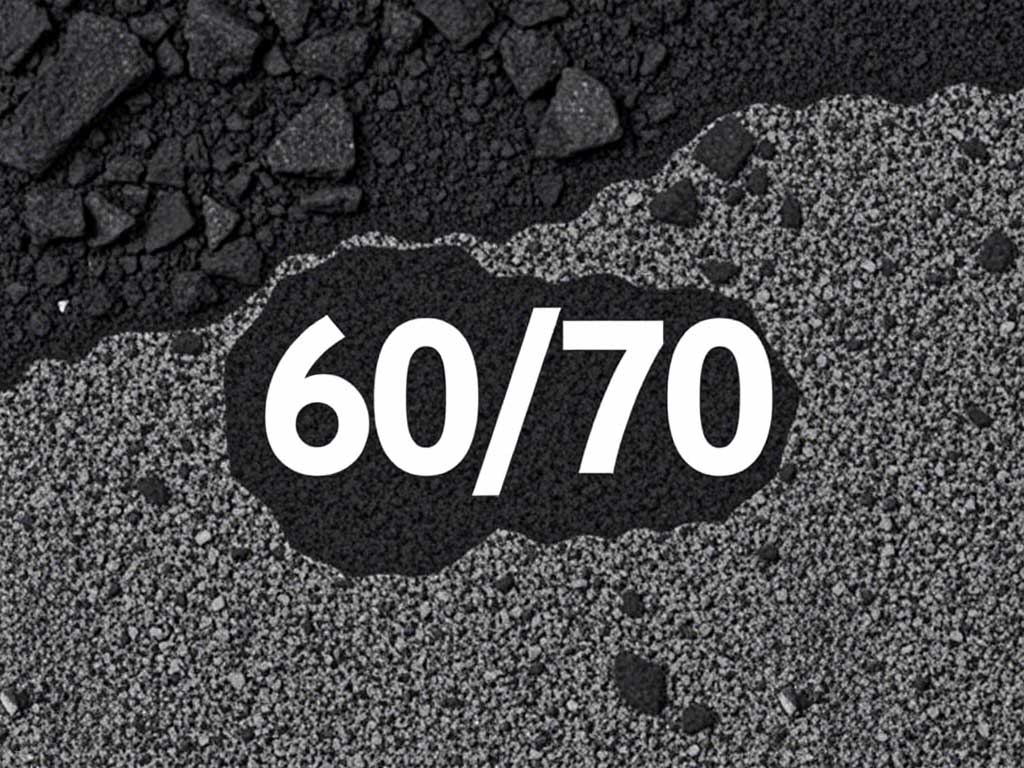
Bitumen 60/70 is a penetration-grade asphalt binder: the semi-solid residue left after crude oil distillation. It is the material that holds aggregate together in a road surface and seals it against water. The “60/70” is a penetration range — the needle penetration test measures how far a standard needle sinks into the binder at a set temperature, and the grade is defined by that figure.
INTBES supplies bitumen 60/70 in export packaging with a certificate of analysis for each lot. The grade is used in road construction, waterproofing membranes and industrial coatings, and the packaging is matched to the destination market and the buyer’s handling capacity.
What the 60/70 grade means
Penetration grading places bitumen in bands according to stiffness. A 60/70 binder sits in the middle of the range: stiff enough to carry traffic, flexible enough to resist cracking at low temperature. That balance is why it is the most widely specified grade for road construction in many markets.
- Penetration — the defining figure, measured at 25°C.
- Softening point — the temperature at which the binder softens; reported per lot.
- Ductility and solubility — reported in the certificate of analysis.
- Flash point — safety figure, reported per lot.
Packaging for export
Bitumen is shipped in three main forms. New steel drums are the most common export pack; they protect the binder and are easy to handle at the destination. Poly-bags are used where the buyer wants a lower-weight pack that can be melted directly into the mixer. Bulk shipments in insulated tanks suit large projects with heated storage at the discharge terminal. The packaging is agreed in the offer, because the choice changes the freight and the handling cost.
Applications
Bitumen 60/70 serves four channels. Road contractors use it for asphalt mixes and surface sealing. Waterproofing manufacturers use it for membranes and coatings. Industrial users take it for pipe coating and roofing. Export traders move it into markets where the local refinery does not produce the grade. Each channel needs a different pack and a different document set.
Supply and logistics
Bitumen is loaded in drums, bags or bulk. Loading port, laycan, Incoterm (FOB, CFR, CIF, DAP) and inspection are agreed in the offer. Because the binder is temperature-sensitive, storage at the discharge terminal is confirmed before the shipment is fixed. The shipment travels with a certificate of analysis and a certificate of quantity.
Quality assurance
Each lot is sampled at loading and tested for penetration, softening point, ductility and solubility. The certificate is issued before the vessel sails. If the lot falls outside the agreed band, it is not released, which protects the buyer from a binder that would fail the road specification.
Frequently asked questions
What does 60/70 mean? It is the penetration grade: the needle penetration figure falls within the 60/70 band. It describes the stiffness of the binder.
Which pack is best for export? New steel drums are the most common and the most protective. Poly-bags and bulk are alternatives, depending on the destination and the buyer’s handling capacity.
Can the grade be matched to a road specification? Yes. The buyer states the local road specification and the offer confirms the grade and the test figures.
What documents come with the lot? Certificate of analysis, certificate of quantity, bill of lading and the commercial invoice.
Request an offer
Send the grade, the packaging, the volume and the discharge port, and the trading desk will return a specification, an indicative price and a loading window. For related products, see light crude oil.
More News

Sulfur Limits in Marine Fuel: What IMO 2020 Changed for Buyers
The 0.50% sulfur cap reshaped the bunker market. What changed, how suppliers meet the limit, and what a…
Incoterms for Petroleum Cargoes: FOB, CFR, CIF and DAP Explained
Four Incoterms cover most petroleum cargoes. What each one transfers, who pays freight and insurance, and where the…

Investing in the Energy Value Chain: Where Opportunities and Risks Sit
Owning production is only one way to participate in energy. Terminals, blending plants, logistics and trade finance each…

Lubricant Additive Packages: What They Do and How to Choose
An additive package is the chemistry that turns base oil into a lubricant with a name. What sits…

Base Oils SN150 and SN500: Grades, Uses and Packaging
The two grades most lubricant blenders buy first. What solvent neutral means, how SN150 differs from SN500, which…
API 5CT and API 6A: A Buyer’s Guide to Upstream Equipment Standards
Two API standards govern most upstream hardware. What 5CT and 6A each cover, which grades and pressure classes…