
LPG Logistics: Moving Propane and Butane by Sea and Land
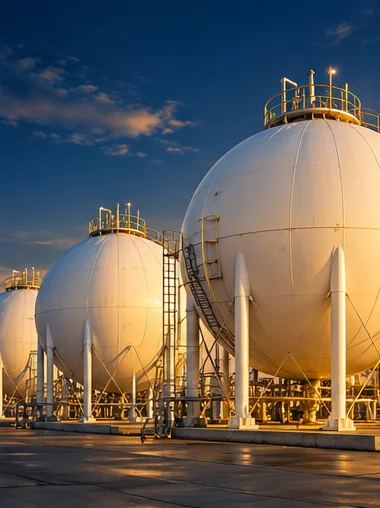
LPG is a mixture of propane and butane that is a gas at normal conditions but becomes a liquid under moderate pressure or at low temperature. That single property allows large energy volumes to be stored and transported compactly — and it shapes every decision in the logistics chain, from the vessel we book to the terminal we nominate.
Propane, butane and the blend
Propane boils at about −42 °C and butane at about −0.5 °C. A propane/butane 50/50 mix therefore behaves differently from pure propane and is used where climate and equipment allow. The practical consequence: propane-rich cargoes suit colder destinations and colder seasons, because pure butane will not vaporise reliably in winter. Buyers should confirm the ratio against local ambient temperature before fixing a cargo.
How it moves by sea
At sea, LPG moves in three broad vessel classes:
- Fully pressurised carriers — keep the cargo liquid by pressure alone. Smaller cargoes, shorter routes, port flexibility.
- Semi-refrigerated carriers — a hybrid, partly cooled and partly pressurised. Mid-size cargoes and the most common commercial compromise.
- Fully refrigerated gas carriers — cool the cargo to hold it below atmospheric pressure. The very large gas carriers carry the biggest cargoes between export and import terminals.
Vessel class is chosen against cargo size, distance and, critically, what the receiving terminal can accept.
Terminal compatibility decides the deal
This is the step that most often catches new buyers. A terminal built for pressurised bullet tanks cannot receive a fully refrigerated cargo without appropriate equipment. Before the cargo is fixed, we confirm that the destination can actually receive it — storage type, unloading arms, metering and pressure rating. A vessel that arrives to find an incompatible terminal is an expensive lesson.
How it moves on land
On land, LPG is stored in pressurised spheres and bullet tanks or in refrigerated tanks, and distributed by road tanker, rail and, in some markets, pipeline. Bulk road delivery serves industrial and power customers; bottled LPG serves residential and small commercial users through a filling plant.
Seasonality
Demand and blend both shift with the season. Heating demand raises winter requirement and pushes the blend toward propane; summer demand leans toward butane for petrochemical and gasoline-blending uses. Planning deliveries a quarter ahead rather than a fortnight ahead usually secures better freight and better terms.
Safety and documentation
LPG is flammable and transported under pressure, so documentation is not a formality. Safety data sheets, quality and quantity certificates, bill of lading and certificate of origin accompany every shipment, and vessel selection reflects the cargo’s classification.
Plan your cargo with us
Give us the ratio, volume, destination terminal and season, and we will come back with vessel options, freight basis and lead time.
More News

Sulfur Limits in Marine Fuel: What IMO 2020 Changed for Buyers
The 0.50% sulfur cap reshaped the bunker market. What changed, how suppliers meet the limit, and what a…
Incoterms for Petroleum Cargoes: FOB, CFR, CIF and DAP Explained
Four Incoterms cover most petroleum cargoes. What each one transfers, who pays freight and insurance, and where the…
Investing in the Energy Value Chain: Where Opportunities and Risks Sit
Owning production is only one way to participate in energy. Terminals, blending plants, logistics and trade finance each…

Lubricant Additive Packages: What They Do and How to Choose
An additive package is the chemistry that turns base oil into a lubricant with a name. What sits…
Base Oils SN150 and SN500: Grades, Uses and Packaging
The two grades most lubricant blenders buy first. What solvent neutral means, how SN150 differs from SN500, which…
API 5CT and API 6A: A Buyer’s Guide to Upstream Equipment Standards
Two API standards govern most upstream hardware. What 5CT and 6A each cover, which grades and pressure classes…