
Investing in the Energy Value Chain: Where Opportunities and Risks Sit
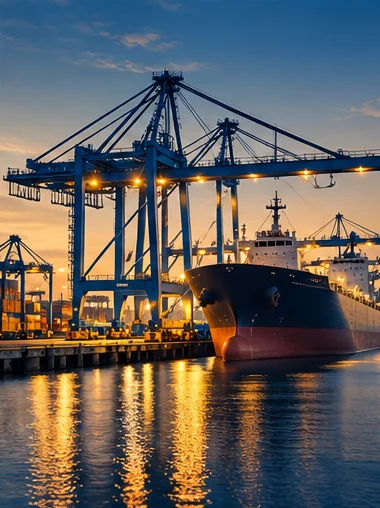
The energy value chain offers several routes for investors beyond owning production assets: storage terminals, blending and packaging plants, logistics and shipping, trade finance and downstream distribution. Each has a different risk and return profile, and — importantly for anyone entering the sector — a very different operational demand.
Storage terminals
Terminals earn fees from handling and holding product, so returns depend on location, utilisation and contract length. The appeal is that revenue is contractual rather than directional: a tank farm is paid whether crude rises or falls. The risks are quieter but real — a long-term lease with one counterparty concentrates credit risk, and a terminal built for the wrong product in the wrong geography empties fast.
Blending and packaging
Blending plants turn base oil and additives into branded lubricants and other finished products. They benefit from regional demand growth and from the margin between a commodity input and a branded output. The operational demand is higher than for storage: quality control, formulation capability and a distribution network all have to exist, not just the plant.
Logistics and shipping
Freight and inland distribution monetise movement. Returns follow demand cycles and fuel costs, which makes the sector cyclical but legible. Specialist equipment — gas carriers, bitumen tankers, flexibag-capable containers — creates a moat, because the asset cannot be redeployed to unrelated cargo overnight.
Trade finance and structured arrangements
Trade finance supports cargo purchases and depends heavily on counterparty quality and documentation. The return comes from structuring and credit discipline rather than from price movement. It is also the area where documentation failure is most expensive: an imperfect letter of credit or an unclear title chain can cost more than the margin on the trade.
Downstream distribution
Retail and wholesale distribution earns from reach and service level. Margins per litre are thin, so scale and reliability decide the outcome. Regulatory access — licences, quality certification, local content rules — is often the binding constraint rather than capital.
The risks common to all of them
- Commodity price swings — affect inventory value and working capital across every segment
- Currency movements — particularly for trade flows priced in one currency and sold in another
- Regulatory change — fuel specifications, emissions rules and sanctions can move a market’s requirements overnight
- Counterparty risk — in a business of large, infrequent transactions, one default can outweigh a year of margin
- Documentation and title — the unglamorous risk that most often turns a good trade into a dispute
A note on where we fit
Intbes operates in trading, supply and the associated logistics rather than as an investment manager. This article is general commentary on how the value chain is structured, not investment advice. If you are evaluating a physical supply opportunity, talk to us — we are far more useful on the cargo than on the portfolio.
More News

Sulfur Limits in Marine Fuel: What IMO 2020 Changed for Buyers
The 0.50% sulfur cap reshaped the bunker market. What changed, how suppliers meet the limit, and what a…
Incoterms for Petroleum Cargoes: FOB, CFR, CIF and DAP Explained
Four Incoterms cover most petroleum cargoes. What each one transfers, who pays freight and insurance, and where the…

Lubricant Additive Packages: What They Do and How to Choose
An additive package is the chemistry that turns base oil into a lubricant with a name. What sits…

Base Oils SN150 and SN500: Grades, Uses and Packaging
The two grades most lubricant blenders buy first. What solvent neutral means, how SN150 differs from SN500, which…
API 5CT and API 6A: A Buyer’s Guide to Upstream Equipment Standards
Two API standards govern most upstream hardware. What 5CT and 6A each cover, which grades and pressure classes…
LPG Logistics: Moving Propane and Butane by Sea and Land
LPG behaves as a liquid only under pressure or cold, which shapes everything about how it ships: vessel…